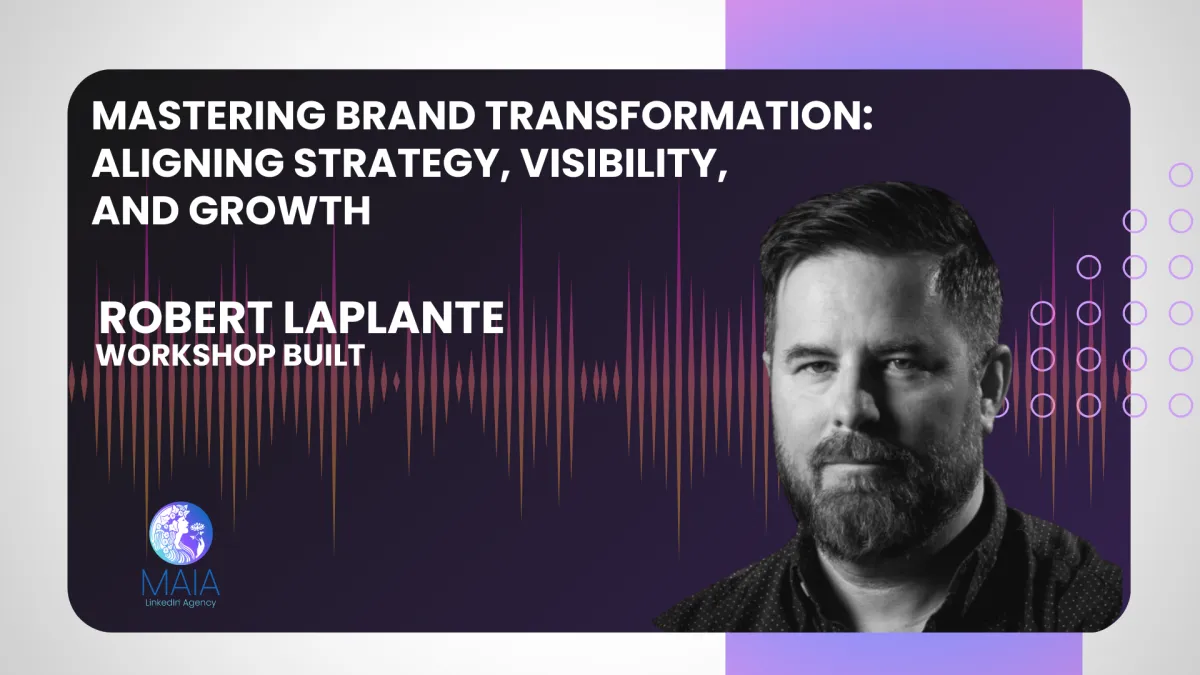
6 - Mastering Brand Transformation: Aligning Strategy, Visibility, and Growth
Brand Transformation as Business Strategy: Insights from Robert Laplante of Workshop Built
In this episode of the Category Leaders Podcast, host Eli Igra Serfaty sits down with Robert Laplante, the Founder and CEO of Workshop Built, to dismantle the common misconception that branding is merely a cosmetic exercise. Robert reveals how true brand transformation serves as a foundational business strategy that dictates decision-making, resource allocation, and market positioning. For founders and executives looking to move beyond a simple logo and create a brand that acts as a genuine growth engine, this conversation provides a strategic roadmap for aligning internal culture with external perception.
Mastering the Architecture of Brand Alignment
A brand is fundamentally the relationship a company has with its audience, yet many organizations fail to treat it with the same rigor as their financial or product roadmaps. Robert Laplante argues that brand strategy is business strategy, emphasizing that if a company’s purpose isn't clearly understood by its leadership, it will inevitably fail to resonate with its customers. To bridge this gap, Robert introduces the "Built Thinking" framework, which treats brand construction much like building a house. By first establishing a rock-solid foundation of core values and mission, companies can craft a vision that guides the customer journey rather than just reacting to market trends.
Internal alignment is the silent killer of brand equity as companies scale. When different departments hold conflicting views of what the brand stands for, the resulting friction dilutes the company's message and confuses the marketplace. Achieving consensus among the executive team is not always an easy or comfortable process, but it is necessary to ensure the brand narrative is amplified consistently. Robert highlights that executive visibility plays a crucial role here; leaders must not only understand the brand but embody it in every public interaction, from LinkedIn posts to keynote speeches, to build the trust necessary for long-term category leadership.
Measuring the return on investment for brand initiatives requires shifting away from short-term metrics toward long-term value indicators. While traditional marketing might look at immediate conversion rates, brand transformation is a marathon that influences earned media, market perception, and employee retention. By defining success early through a mix of qualitative sentiment and quantitative data—such as website traffic and organic search growth—leaders can set realistic expectations for stakeholders. Ultimately, a brand is only as strong as the product it represents, and ensuring a symbiotic relationship between the two is the only way to build an authentic, lasting connection with an audience.
About Robert Laplante
Robert Laplante is the Founder and CEO of Workshop Built, a strategic brand consultancy that helps companies navigate complex growth transitions. With a deep background in design and strategic thinking, Robert specializes in helping leadership teams find alignment and translate their internal mission into a powerful, market-facing identity.
About Workshop Built
Workshop Built is a brand transformation agency that utilizes a unique "Built Thinking" methodology to scale brands. They partner with founders and executives to move beyond surface-level aesthetics, focusing on the structural foundation of a company to ensure its brand is a functional, strategic asset that drives measurable business results.
Links Mentioned in This Episode
Key Episode Highlights
Brand as Business Strategy: Why treating your brand as a core business function, rather than a marketing expense, changes how you allocate resources.
The "Built Thinking" Framework: A four-step structural approach to building a brand: Foundation, Vision, Experience, and Growth.
The Cost of Misalignment: How internal confusion among leadership teams can stall growth and erode customer trust.
Executive Body Language: The importance of leaders embodying the brand narrative to maintain authenticity in the market.
Simplifying the Strategy: Why the most effective brand strategies are those distilled into clear, actionable ideas that every employee can champion.
Conclusion
The conversation with Robert Laplante serves as a powerful reminder that category leadership is built on clarity and consistency. When a brand is treated as a strategic relationship rather than a static asset, it creates an emotional bond with the audience that is difficult for competitors to break.
To discover how you can streamline your operations and lead your industry with purpose, head over to Team Maia for more expert insights and resources.
Are you a founder or executive who has successfully navigated the path to becoming a market authority? We’d love to hear your story. Apply to be a guest on the Category Leaders Podcast here and share your journey with our audience of innovators.